Skip to content
  • Free written estimates
  • Local crews
Huntsville, AL (256) 555-0165
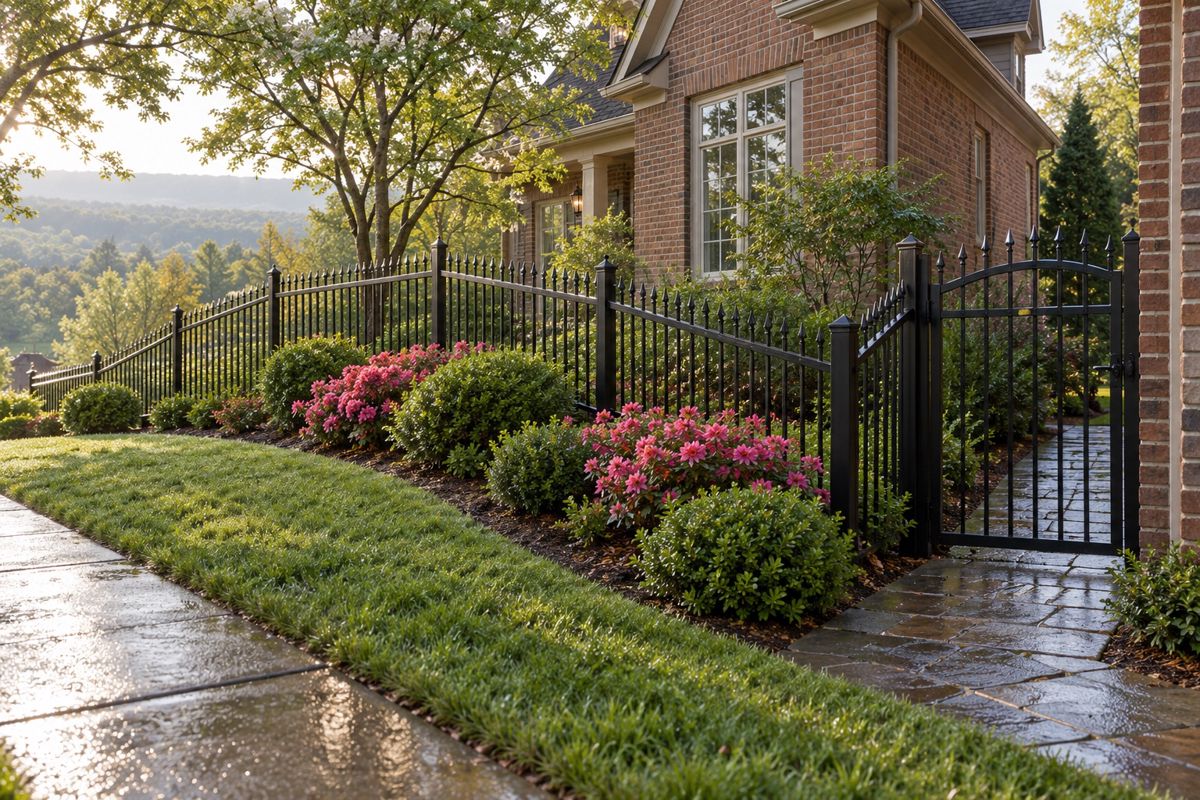
Black aluminum fence stepping down a sloped Alabama front yard

Aluminum and iron in Huntsville, AL

Aluminum fence installation in Huntsville for open-view yards

Aluminum and ornamental iron fences that look sharp, keep pets and kids in, and let you see the yard. Ask about pool and slope layouts.

  • Picket, spear-top and flat-top styles
  • Rust-resistant aluminum or heavy iron
  • Stepped or racked panels for hills

Step 1 of 3

What do you need?

What is the difference between aluminum and ornamental iron fencing?

Both give the classic black picket look, but they are different products. Aluminum fence installation in Huntsville is popular because aluminum does not rust, is lighter, and often costs less. It is powder-coated, most often black, with bronze and white also offered. Ornamental iron, usually made of steel, is heavier and stronger, and suits large gates, security needs or a more traditional look. Steel needs touch-up paint over time, since bare spots will rust in our humid air.

Neither type gives privacy. If you need to block the view, look at wood fencing or vinyl. Many owners use aluminum across the front and around a pool, and a solid fence along the back and sides.

Where do aluminum and iron fences fit well in Huntsville?

The open design fits a few situations especially well.

  • Pools. You can see the water from the house, and the fence can meet local barrier and latch rules. Pool requirements differ by city and county, so check before you build.
  • Front yards. Many newer subdivisions and HOAs prefer ornamental fences to solid ones, because they keep the street view open.
  • Sloped lots. Panels can be racked to follow gentle slopes or stepped on steeper ground, which suits hillside lots near Monte Sano and Hampton Cove.
  • Entrances. Iron works well for wide driveway gates, including automatic ones.

Rain and humidity are not a worry for powder-coated aluminum. Over time, a rinse with a hose is usually all it needs.

What goes into the installation?

Panels come in sections, commonly around six feet wide, that fasten to posts with brackets or screws. Posts are set in concrete and spaced to match the panel width, so layout matters. Corners, curves and a change in grade all call for careful measuring before the first hole is dug.

On a hill, racking only works up to a certain slope. Steeper ground needs stepped sections, which leave a gap under the panel that can be filled with landscaping or a lower rail. Iron is often cut and welded on site. Gates hang on heavy hinges, and an automatic gate needs larger posts, power and sometimes buried conduit planned before concrete goes in. Our gate and repair page explains openers in more detail.

Price drivers for aluminum and iron are straightforward.

  • Length and height. Taller panels cost more, and four to five feet is common for pools and yards.
  • Style and gauge. Heavier rails and fancy finials cost more.
  • Metal. Steel and custom ironwork usually cost more than standard aluminum.
  • Ground. Slopes, rock and wet clay add digging and layout time.
  • Gates. Wide drive gates and automatic operators add hardware, power and labor.

Many standard aluminum jobs are done in a few days once materials arrive, but custom or made-to-order pieces can take longer to get. Ask for lead times in writing. Weather and HOA approval can also change the schedule.

When should I call about aluminum or iron fencing?

Call when you are planning a pool, building or buying a home in a neighborhood with ornamental fence rules, or replacing a rusted old iron fence. Call early, since pool barriers and HOA approval can take time. Bring a rough sketch, your address and a list of gates.

Questions to ask any installer:

  • Is the fence aluminum or steel, and what is the panel gauge?
  • How will the fence handle my slope?
  • What is the picket spacing, and does it suit my pets or pool rules?
  • How are posts set, and how are gates braced?
  • Can I see license and insurance paperwork?

You can browse every service on the home page.

How it works

1

Tell us about the fence

Length, style and goals.

2

Site visit and quote

We measure and put the price in writing.

3

Installation

Posts set properly, gates hung true, site cleaned.

Free written estimates
Local crews
Clear timelines
Cleanup included

Request aluminum and iron

Tell us what you need and we call you back.

No obligation.

Step 1 of 3

What do you need?

Questions about fencing in Huntsville

Will an aluminum fence keep my dog in?

It can, depending on the dog. Picket spacing is set by the product, and small dogs and puppies may slip through standard gaps. Ask about closer-spaced pickets or a lower mesh liner. Jumpers may need a taller fence, and diggers may need a barrier at the base. Tell the installer about your dog before the quote is written.

Does aluminum fencing rust?

Aluminum does not rust, and powder coating protects the finish from fading and scratches for a long time. Cut ends and deep scratches can show wear, so touch-up paint helps. Steel and iron do rust where the coating is damaged, so they need occasional touch-ups. Ask what finish is used and what care it needs.

Is aluminum strong enough for storm wind?

An open fence lets wind pass through, so it carries much less wind load than a solid privacy fence. Strong posts and concrete still matter, and trees falling on any fence can damage it. Heavier gauge aluminum or steel stands up better to knocks and abuse. Ask about gauge and post size in the quote.

Can I get an automatic driveway gate?

Often yes. Automatic gates need strong posts, a gate that swings or slides freely, power or solar, and safety sensors. Planning for wiring before the posts are set is easier than adding it later. Local rules or an HOA may apply to gates at the street, so check first. See our gate page for more.

Are there rules for pool fences?

Many places have pool barrier rules covering fence height, picket spacing and self-closing, self-latching gates. These rules vary by city, county and sometimes insurance company. Check with your local building office before you choose a fence, and ask your installer to design to those rules. This is general information, not legal advice.

Should I choose aluminum or iron?

Aluminum suits most homes. It does not rust, weighs less and often costs less. Iron or steel suits heavy gates, security needs or a traditional look, and costs more to buy and keep painted. If you are unsure, ask for both in writing and compare the upkeep, as well as the price.

Ready when you are. Call now or request a quote online.

Takes about 30 seconds. Get my free fence quote